Alicia Donadio
The Passage (Justin Cronin Edition)Alicia Donadio, known to nearly everyone as Alicia Blades, grows from the last member of the Donadio family into a formidable Watch fighter and, later, an officer of the First Expeditionary. The Colonel teaches her that survival requires more than skill at arms: when virals come, a fighter must be prepared to give up the expectation of staying alive. Alicia learns the lesson without surrendering her concern for other people. Again and again, she steps toward danger to protect someone else, and her eventual transformation into the New Thing makes her a boundary figure between human and viral life.
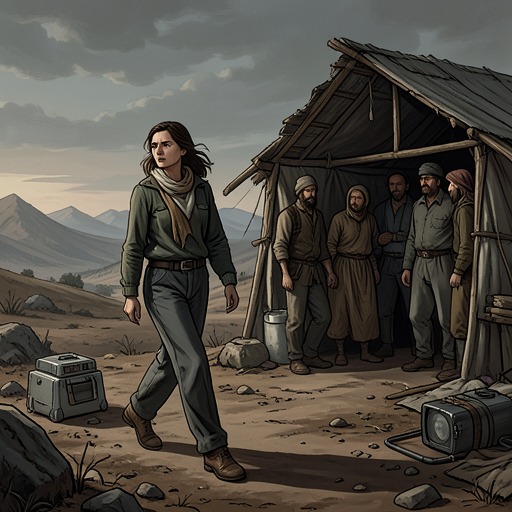
Identity and Training
Alicia is the last Donadio, though the name most people use for her is Alicia Blades. She is described as the youngest Captain since the Day. The Colonel raises and trains her in the hut beneath the Wall and, as she grows, in the training pits, passing on what he learned in the Darklands. His instruction includes fighting and killing, but also the discipline of accepting that a person may already be as good as dead when the virals arrive. The belief is not an invitation to carelessness; it is a way to act when fear cannot be allowed to decide.
At eight, Alicia apprentices to the Watch. She quickly surpasses others in skill with bow and blade. By fourteen, she is a runner on the catwalk, carrying messages between firing platforms. The role is deliberately distinct from that of a fighter: a runner should sound an alarm and get clear, not engage the virals. Alicia’s later choices repeatedly cross that line between assigned duty and personal responsibility.
The Wall and the First Colony
One night, a group of six virals comes over the south Wall while Alicia is moving along the catwalk. Instead of running and sounding the alarm as a runner is supposed to do, she attacks the first one. This early defiance of her role establishes the pattern that will recur throughout her life: when an immediate threat presents itself, formal instruction and self-preservation give way to action.
Later, when someone beyond the Wall needs help, Alicia sees a person rather than a threat to be dismissed. She runs along the catwalk, shouting for the others to hold their fire and calling for ropes. With the person responsible for authorizing a descent absent, she takes the rope herself and steps over the rampart. Her decision puts her outside the protection of the Wall, but it also makes the need for rescue impossible to ignore.
When the authorities seek to arrest someone for that crossing, Alicia places herself in front of the door and claims responsibility. She tells the others that she went over and offers herself for arrest. The gesture is not simply a defense of her own conduct: by naming herself as the person to punish, she makes it harder for the community to direct punishment toward someone else.
Alicia’s sense of responsibility becomes especially visible when the First Colony’s anger turns against a girl. Alicia says the girl is not the reason the crowd has gathered and identifies herself as the cause. She does not resist as Watchers pull her upright and Ian removes her blades. Injured and disarmed, she is held like a prisoner; Peter understands that she has drawn the crowd’s fury onto herself, deflecting it from the girl and buying time. Ian then announces that Alicia Donadio is under arrest for treason. The accusation gives official form to the danger she has accepted on another person’s behalf.
A Fighter and an Ally
Alicia’s readiness to confront danger is matched by practical judgment. On a journey with Peter, she spots approaching flyers and tells him to come with her. When a viral launches at them from a fence, she fires before it reaches them, then follows with three quick shots. She is not merely brave in the abstract: she watches for a threat, chooses when to act, and protects the person traveling beside her.
At a filling station, she climbs onto the roof of a dumpster to get a better view. The gesture illustrates the habits that make her useful as a scout: she seeks a vantage point rather than waiting for danger to become immediate. After an encounter with virals, she admits uncertainty about whether all of them were angry, wraps the rifle sling tightly around her forearm, and asks Peter to promise that, if she is infected, he will make sure she does not become one of them. Her request shows that the Colonel’s lesson about death has not erased her fear of losing herself. She is willing to face danger, but she also makes explicit the consequence she most wants Peter to prevent.
Alicia’s authority is not limited to combat. When she takes a cross from someone holding it, she keeps it loosely at her side in a deliberately nonthreatening posture. The act is controlled, but her presence itself carries weight. She asks whether the other person is any good with the object, treating it as something whose use matters in the situation at hand. When Alicia doubts that they can talk their way past an obstacle, she does not mistake confidence for a plan; she recognizes when negotiation may fail. She also tells another person that they do not have to go through with what is being asked of them, making room for refusal even amid pressure and danger.
The First Expeditionary
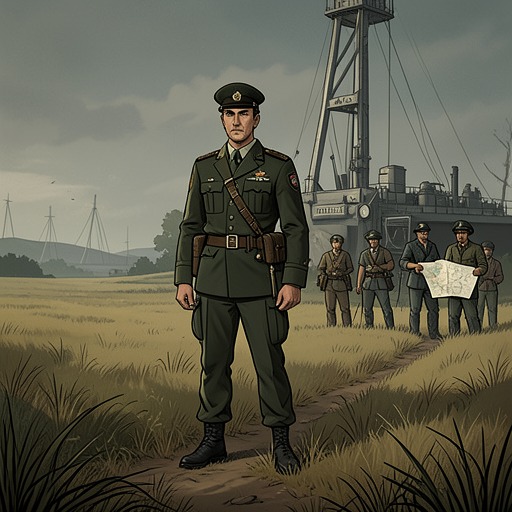
Alicia’s identity shifts from the defender of the First Colony to a soldier in the First Expeditionary. When she meets General Vorhees, she identifies herself as Colonel Niles Coffee’s adopted daughter and gives her military designation: Private Alicia Donadio, First Expeditionary, baptized and sworn. The formal introduction makes clear that the Colonel’s bond with her is familial as well as formative, while the oath places her within a military body beyond the Colony.
During the expedition, Alicia discovers a large concentration of virals and reports that they have stumbled into a hornet’s nest, with hundreds present. The report conveys the scale of the threat without turning discovery into a claim of victory. Later, after severe losses have thinned the battalion’s ranks, Greer gives Alicia a battlefield commission. By the end of the second day of preparations, the camp is nearly packed: food, weapons, gear, and most of the larger tents are ready to move, while the lights, mostly empty fuel tankers, and a single Humvee will remain. The battalion is to travel south in two groups, and Alicia leads the small horseback scouting party ahead of the others in trucks and on foot. Now Lieutenant Donadio, she is entrusted with the forward edge of the movement.
The expedition also gives new weight to her title as the Last Expeditionary. Hollis remarks that the designation is a mouthful; Alicia’s own role, however, is concrete. She scouts, reports danger, and leads the advance. Her progression from a young runner on a catwalk to a commissioned officer is not a break with her earlier character so much as its enlargement: the person who once ignored a runner’s restriction to meet an immediate threat now bears responsibility for the safety and direction of a party.
Friendship, Loss, and the New Thing
Alicia tells a close friend that they have been friends for as long as she can remember, and insists that nothing can change that. She then asks for the confidence of keeping what she is about to disclose between them. The moment reveals a private trust beneath her public reputation for competence. Alicia’s friendships are not incidental to her sense of duty; they give her people to protect, and they provide a space in which she can speak plainly about what she has kept hidden.
That concealed truth reaches beyond the Colonel. The narration identifies him as not being the real secret: Alicia herself is the secret she has kept, one that both of them have kept from each other and even from themselves. The disclosure reframes the bond between them. The man who trained and adopted her is not simply the source of her combat skills or a substitute parent; their connection is bound up with something neither has fully acknowledged.
Alicia’s final human vulnerability is tested in a viral attack. The creature that reaches her is the fourth to attack; by then, her gun is empty. As she tries to reload and then reaches for her blade, the attack overtakes her. Peter later remembers the moment through successive details of the exhausted weapon and her unsuccessful attempt to defend herself. The scene reverses the pattern that has defined her since childhood: the fighter who repeatedly intervenes before a threat can claim others is, at last, unable to stop one from reaching her.
Yet her story does not end with the attack. The blade falls, then abruptly stops. The survivors call Alicia the New Thing: neither one state nor the other, but somehow both. She cannot feel the virals as Amy can, or hear the world’s question and sadness in the same way. In most respects, she remains the Alicia everyone knew. The change is therefore not presented as a straightforward replacement of her identity by viral nature. Instead, Alicia occupies an unresolved threshold: recognizably herself, altered, and no longer contained by the old distinction between human and viral.
Narrative Role
Alicia’s plot combines apprenticeship, adventure, sacrifice, and transformation. The Colonel’s maxim prepares her to face mortality, but her defining actions are not solitary feats of endurance. She steps beyond the Wall to help someone, takes blame to protect others, shields a girl from a crowd, and accepts the responsibility of leading scouts into danger. Courage in her story is therefore measured as much by whom she places between danger and as by how well she fights.
Her transformation extends that pattern into the book’s central uncertainty about what survives infection. Alicia’s continuing selfhood resists a simple account of infection as the end of personhood, while her changed relation to the virals marks a real break from ordinary human experience. She is neither restored to her former life nor reduced to the enemy she once fought. The title of the New Thing names that tension, leaving Alicia as a living question about identity, survival, and the possibility that change need not erase the person who changes.